
Creating a home service activity is not just about choosing a legal status and approaching clients. Even before the first intervention at a private residence, several administrative and tax mechanisms determine the project’s viability. SAP declaration, departmental approval, immediate tax credit: each system has its own rules, and some have changed recently.
SAP declaration, approval, or authorization: the costly confusions
Have you heard of the “SAP declaration” without really knowing what it covers? The distinction is crucial for your activity.
The declaration is made on the NOVA platform and concerns the majority of common services: cleaning, gardening, tutoring, minor DIY work. It allows your clients to benefit from the tax credit, which is a major selling point.
On the other hand, interventions with vulnerable populations require approval or departmental authorization. Assistance for dependent elderly people, support for disabled individuals, childcare for children under three years old: these activities cannot be carried out with just a simple declaration. The home autonomy service authorization is granted by the departments, often as part of calls for projects, and not directly through NOVA.
Confusing declaration and approval exposes you to a concrete risk: operating without the required title, which can lead to the loss of the tax credit eligibility for your clients and administrative penalties for you. To better understand these distinctions and prepare your project, a detailed guide on home services on Wiki for Home outlines all the steps involved.

Exclusive or mixed activity: what has changed in 2025 for self-employed individuals
Until recently, offering personal services required dedicating oneself exclusively to it. A self-employed individual providing home cleaning could not simultaneously sell cleaning products or offer professional cleaning under the same status.
Since January 1, 2025, this obligation has been relaxed for micro-enterprises and structures with fewer than eleven employees. It is now possible to engage in a complementary activity outside of SAP, under two main conditions:
- The revenue related to the non-SAP activity must remain below a defined regulatory ceiling.
- Separate accounting must be maintained to clearly distinguish the two types of income.
- The SAP declaration on NOVA remains mandatory for the personal services part to maintain eligibility for the tax credit.
This change opens up concrete possibilities. A home gardener can sell plants or equipment. A tutor can offer group workshops outside the home. The mixed activity allows for income diversification without multiplying legal structures.
Immediate tax credit: a client advantage to master (and its limits)
The tax credit for home employment represents half of the service costs for the client. Since the establishment of the immediate advance managed by Urssaf, the individual only pays half of the invoice at the time of payment, without waiting for their income declaration.
Why is this crucial for you as a service provider? Because the price displayed after the tax credit is often the argument that triggers the client’s decision. A cleaning service charged at twenty euros per hour effectively costs ten euros after the immediate advance. Without this mechanism, you lose a significant part of your competitiveness against undeclared work.
Exclusions to know before targeting your clientele
The immediate advance does not yet apply to all beneficiaries. Individuals receiving certain allowances such as APA (personalized autonomy allowance), PCH (disability compensation benefit), or PAJE (young child welcome benefit) may not have access to it in all cases.
If you primarily target dependent elderly individuals or families with young children, your clients may have to pay the full amount upfront and wait for the tax reimbursement. This is a real barrier to conversion. It’s better to know this before building your commercial offer.
Qualification and training: what the law really requires
Contrary to popular belief, most home service activities do not require any diploma. You can offer cleaning, gardening, or minor DIY work without any specific certification.
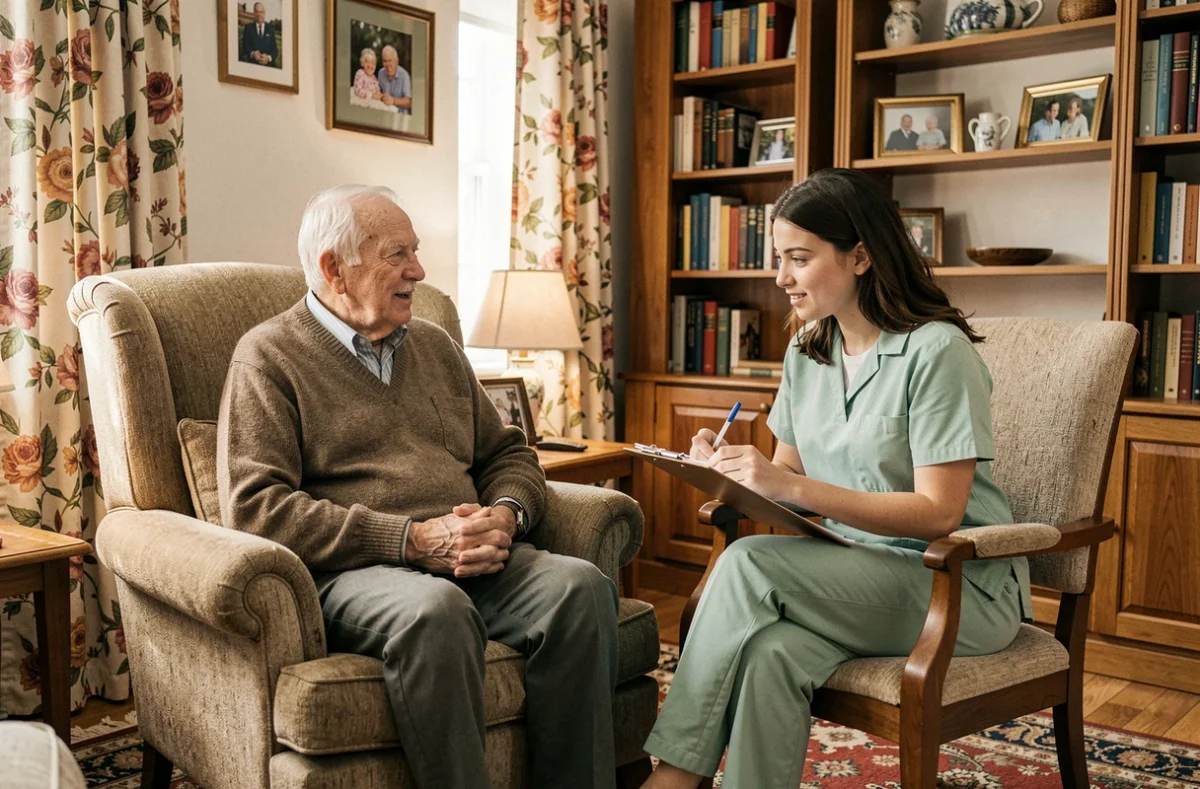
The situation changes for activities involving vulnerable populations. Childcare for children under three years old, assistance for elderly or disabled individuals, and certain hygiene care require qualification certified by a diploma or professional title. The DEAES (State diploma for educational and social support) or the professional title of family life assistant are among the most common pathways.
- For assistance with bathing and daily tasks: a minimum CAP level diploma in the medico-social field is generally required.
- For childcare for children under three years old: a specific certification (CAP AEPE or equivalent) is mandatory.
- For tutoring or cleaning: no qualification is required, but a SAP declaration is still necessary for the tax credit.
Continuing education also represents a lever. Companies in the sector often need to justify skills development plans to maintain their approval, especially when acting as service providers for vulnerable populations.
Building a profitable offer in home services
The personal services sector attracts many entrepreneurs, leading to often dense local competition. Differentiation relies less on pricing and more on targeting.
Choosing two or three complementary activities rather than offering everything allows for better planning and client loyalty. A provider specializing in supporting autonomous elderly individuals (shopping, meals, light housekeeping) builds a stronger trust relationship than a generalist alternating between gardening and tutoring.
Profitability depends as much on travel time as on hourly rates. Focusing interventions in a limited geographical area reduces unpaid travel and increases the number of productive hours in the day.
The choice of operating mode also matters. As a service provider, you bill the client and manage the entire relationship. As a representative, an intermediary structure handles the administrative formalities. Each option has its constraints, but the service provider mode offers more control over the margin and client relationship, provided you take on the administrative management.
The home services market remains promising, but success relies less on demand than on the rigor of preparation. Verifying your regulatory framework, anticipating the limits of the immediate tax credit, and defining a realistic intervention scope are three decisions that separate viable projects from those abandoned in the first year.