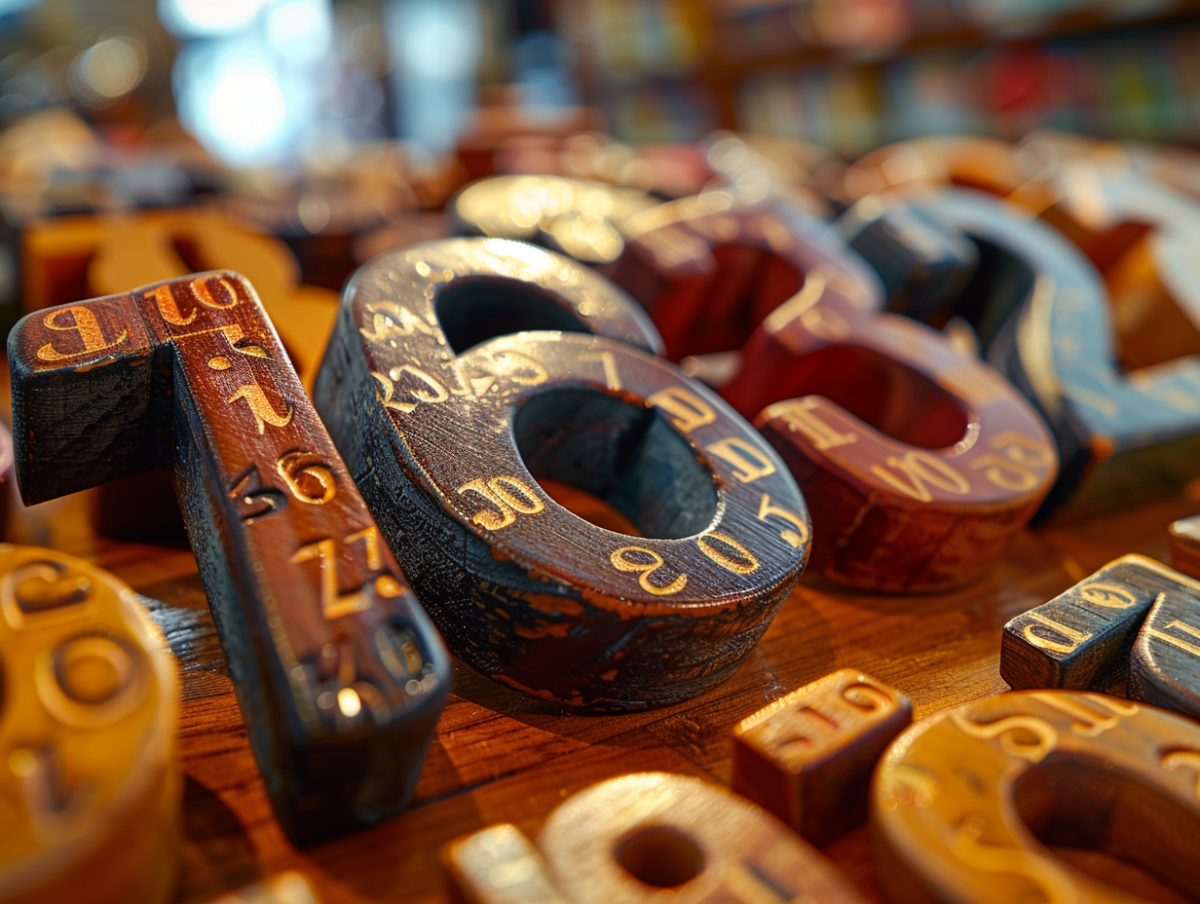
Throughout the ages and across continents, numbers have always carried deep meanings. They constitute a universal language, but each culture assigns unique interpretations to them, colored by beliefs, traditions, and philosophies. Asian cultures, for example, often associate the number 8 with prosperity, while 13 is perceived as a sign of bad luck in many Western societies. These numerical symbols influence architecture, spirituality, art, and even daily practices, revealing a complex weaving between the abstract and the concrete, the individual and the collective, the mystical and the pragmatic.
Numbers and Their Cultural Significance Around the World
The cultural significance of numbers is embodied in a vast array of contexts across the globe, revealing varied perspectives on the symbolism of numbers. In Asia, the number 7 resonates with connotations of luck and spiritual renewal, while its repetition, as in ‘7777’, is sometimes seen as an extremely favorable omen, amplifying its positive reach. This view contrasts with that of certain Western cultures, where the number 13 is often avoided in building addresses or airplane seat numbers, reflecting a superstition rooted in history and tradition.
Diving into the study of semiotics applied to numbers reveals that they transcend their simple arithmetic value to become powerful symbols. Their ability to evoke immaterial, even mystical realities is a pervasive phenomenon. For example, in many narratives and belief systems, the number 3 is often associated with trinity, balance, and complete harmony, a representation that transcends time and borders.
The symbolism of numbers, on the other hand, examines the functions, structures, and histories of numerical symbols. The number 12 carries significant symbolic weight, whether through the twelve months of the year, the twelve zodiac signs, or the twelve apostles in Christian tradition. These examples illustrate how numbers can embody an organizing structure in myths, religions, and social systems, revealing a thread that connects individuals to the cosmos and its supposedly immutable laws.
Numbers and Their Role in Beliefs and Spiritual Practices
Numerology and Kabbalah are eloquent examples where numbers do not merely represent quantities but become vectors for a quest for meaning and knowledge. In numerology, each digit carries a specific vibration, an essence that influences human destiny. The analysis of birth dates or proper names through their numerical equivalents seeks to reveal trends, potentials, and inherent challenges in individual experience.
As for Jewish mysticism, it is expressed notably in the tradition of Kabbalah, where the tree of life and its sephiroth, or divine emanations, are associated with numbers. This complex structure serves as a map for navigating spiritual dimensions, with each number becoming a key to understanding the relationships between the human and the divine. In this context, numbers are not mere markers but fully-fledged symbols, tools for spiritual awakening.
The philosophy of mathematics also offers profound reflection on the role and nature of numbers. Pythagoras, for example, saw in whole numbers the very substance of things, an idea that profoundly influenced Western thought. Plato, for his part, established a distinction between Ideal Numbers, which participate in his theory of forms, and the arithmetic numbers used in daily calculations.
Occultism associates numbers with laws of the creation plane, considering that each digit holds a mystical correspondence with cosmic forces. This view, where the material world reflects a higher numerical harmony, finds its roots in many esoteric traditions and continues to inspire contemporary practices. From Kabbalah to modern numerology, numbers remain a powerful catalyst for exploring the mysteries of existence.