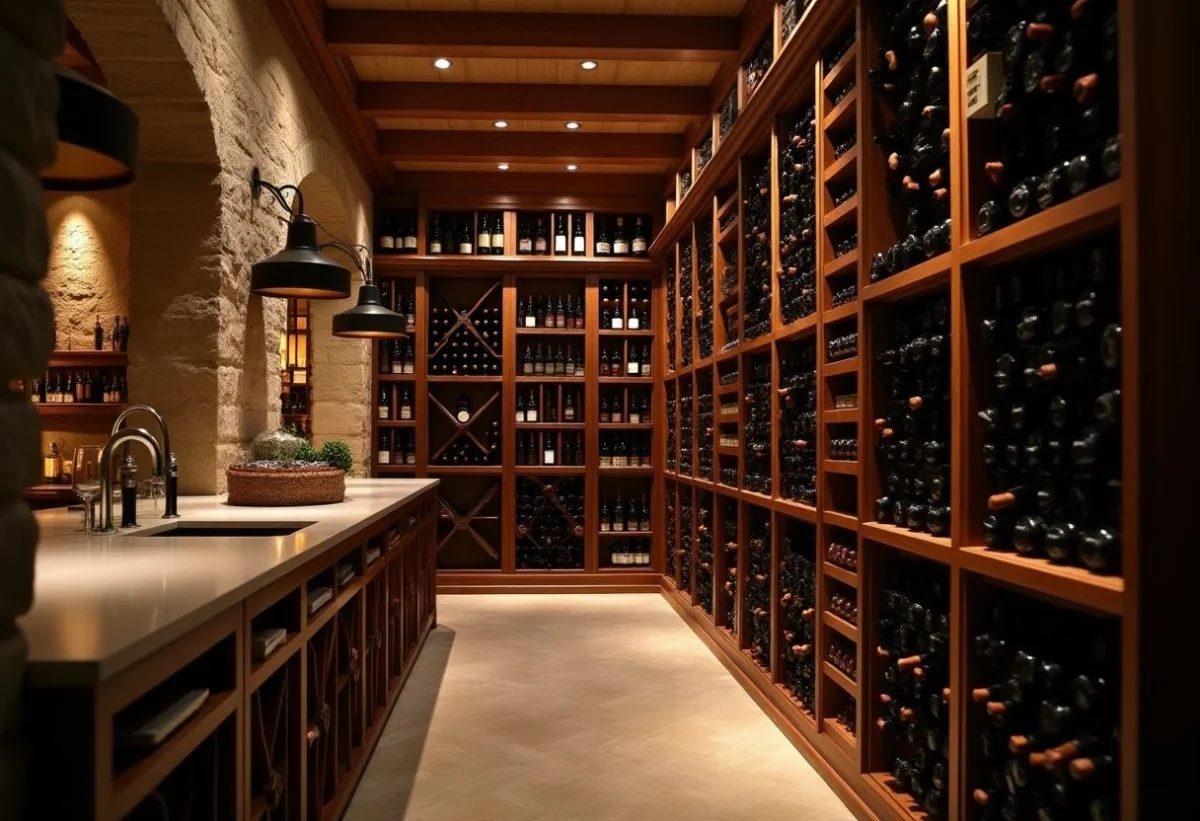
In the enigmatic world of wine, the wine cellar holds a special place. It is not merely a storage space, but a sanctuary for wine lovers and a place where time flows differently. The bottles rest in a controlled atmosphere, subtly reaching their peak. Wine cellars are not all the same. Some are works of art, sculpted from noble materials and offering a grand setting. Others, more modest, still meet conservation needs with excellence. The choice of the cellar, its management, and maintenance require a know-how that is often passed down from generation to generation.
The origins and history of the wine cellar
The wine cellar has traversed the ages, adapting to technological evolutions and the changing tastes of consumers. Understanding its history allows one to grasp its full significance and importance.
- Antiquity and the Middle Ages: the earliest remnants of wine cellars date back to Antiquity, where the Romans already stored wine in amphorae. In the Middle Ages, driven by monasteries, wine became a precious commodity, requiring rigorous conservation.
- Modern Era: winemaking and conservation methods evolved. Cellars improved, gradually integrating temperature and humidity control techniques. The use of barrels gave way to bottles and cork stoppers.
- Contemporary Era: today, the wine cellar is a symbol of refinement and the art of living. Modern technologies allow for precise management of conservation conditions, ensuring optimal aging for the wine.
Design and layout of a wine cellar
Creating a wine cellar is not a trivial task. Every detail matters, from the choice of materials to the orientation of the bottles. This requires a thoughtful approach and a keen sense of aesthetics and practicality.
- Location: the location of the cellar is essential. It should be shielded from direct light and maintain a constant temperature. Basements are often favored for their ability to retain natural coolness.
- Materials: opting for natural materials like wood or stone contributes to good insulation and optimal humidity regulation.
- Layout: the shelving should be designed to facilitate access and rotation of the bottles. A horizontal arrangement is recommended to maintain contact between the wine and the cork.
- Aesthetics: beyond its primary function, the cellar can become a design space. Lighting and decoration can transform this place into a centerpiece of your home.
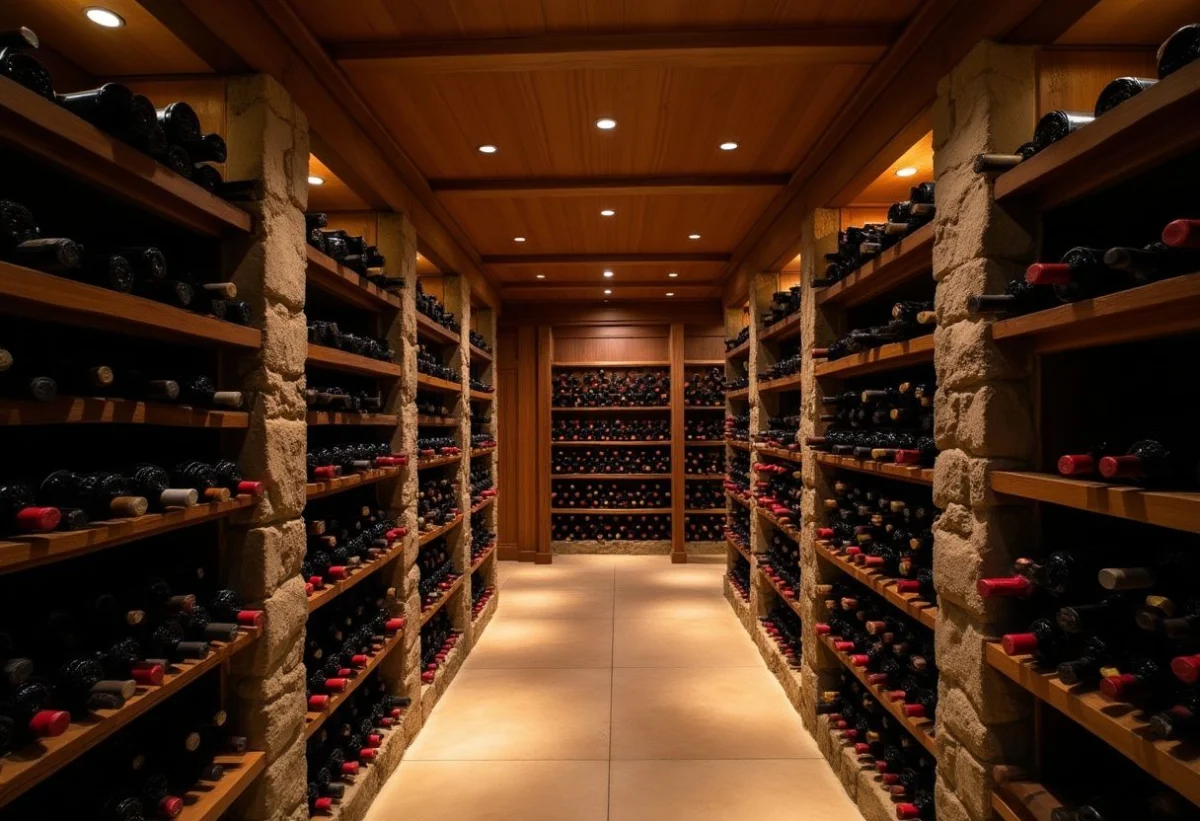
The secrets of successful conservation
Storing wine is not an exact science, but certain principles remain unchanged to ensure the quality and aging of the bottles. Mastery of these techniques is the result of a long tradition and proven know-how.
First, humidity must be closely monitored. A humidity level of 70% helps preserve the integrity of cork stoppers, thus preventing premature oxidation of the wine. Similarly, the ideal storage temperature is between 10 and 14°C. The stability of this temperature is crucial to avoid altering the complex aromas of the wine. Next, bottles must be protected from vibrations. Even slight movements can disturb the sediments present in the wine and affect its aging. Finally, it is advisable to protect wines from light. Ultraviolet rays can degrade the organic components of the wine, irreversibly altering its taste and bouquet.
Evolution of technology and the wine cellar market
The wine cellar, once a privilege of the elite, is now experiencing democratization thanks to technological advancements and an increasingly diverse offering. Many enthusiasts now wish to own their own dedicated wine space, and this desire is supported by a booming industry.
Innovations continue to transform the wine cellar market. Automated regulation systems allow for remote control of conservation conditions. The design of cellars has also evolved to adapt to modern interiors, with integrated, compact, and aesthetic models. Finally, the market offers options for all budgets, from customized cellars to more accessible models, making optimal wine storage available to everyone.
Choosing a wine cellar suited to one’s needs thus opens new perspectives for enthusiasts and collectors.
Cellars are not just storage spaces; they embody a philosophy of life where time, patience, and passion come together to offer the best of wine.