
More than 70% of small businesses without a website struggle to establish a climate of trust with new clients. However, building a credible online presence is neither reserved for coding experts nor synonymous with outrageous spending, provided you invest in the right tools.
Dedicated platforms have changed the game: creating your website now takes much less time than one might think. Technical choices, often perceived as a headache, become manageable steps once you master the existing solutions. Yet, some classic pitfalls still delay the launch of a project, harming its effectiveness and visibility.
Why a professional website makes a difference for entrepreneurs and beginners
Digital presence no longer merely accompanies an activity: it reveals its seriousness and solidity. Having a professional website is a major visibility lever, establishing your credibility and enhancing your ability to convince new collaborators or clients. Whether you run a micro-enterprise or an SME, the impact is quickly measurable. According to France Num, 66% of French TPE/PMEs have a website. But 18% are still absent from the web: an absence that comes at a cost, as 97% of internet users use local search to find a professional, and 78% of mobile searches lead to a concrete purchasing action.
Equipping yourself with a professional website means turning your back on dependence on social networks or sales platforms. You regain control over your image, client database management, and data collection. The website then becomes an anchor point: it structures the activity, makes it accessible from anywhere, at any time, and legitimizes every communication. The aspects of SEO, online sales, acquiring new contacts, and managing reputation are centralized in this space that you truly control.
For entrepreneurs starting out, resources like https://www.nirajweb.net/ offer concrete examples, advice, and methods to approach website creation, understand visibility mechanisms, and develop a solid digital strategy from the very first steps.
What steps to follow to go from an idea to an operational and attractive website?
Before rushing in, it’s essential to anchor the project on solid foundations. The choice of domain name matters: it should be available, easy to remember, and consistent with the activity. Protecting it through the INPI avoids unpleasant surprises. On the hosting side, prefer a recognized provider: the speed and stability of your site depend directly on it.
The type of site to create guides the technical choices. Here are the main categories of possible projects:
- A showcase site to display an activity and reassure visitors
- An e-commerce site to sell online and manage orders
- A blog to share expertise, advice, and industry news
Next, you need to select an appropriate CMS: WordPress, Wix, Shopify, or other accessible solutions allow you to get started without advanced development knowledge.
The visual identity should not be left to chance. Logo, color palette, typography: every detail shapes the brand image. To structure the site, build it around essential pages:
- A homepage that presents the offer and promise at a glance
- An “About” page to tell the story, values, and journey
- Product or service pages with precise and engaging descriptions
- A functional contact form that is easy to find
- Customer testimonials to reassure and inspire trust
- Legal notices, guarantees of transparency
A crucial detail: the site must be responsive. On smartphones or tablets, every page should display perfectly. Publish original, useful content designed to meet the real expectations of visitors. Integrating a blog will allow you to regularly update the site, improve its SEO, and expand your audience.
Keep in mind that a professional website is not meant to impress with complexity, but to convince through clarity, quick access, and relevant information.
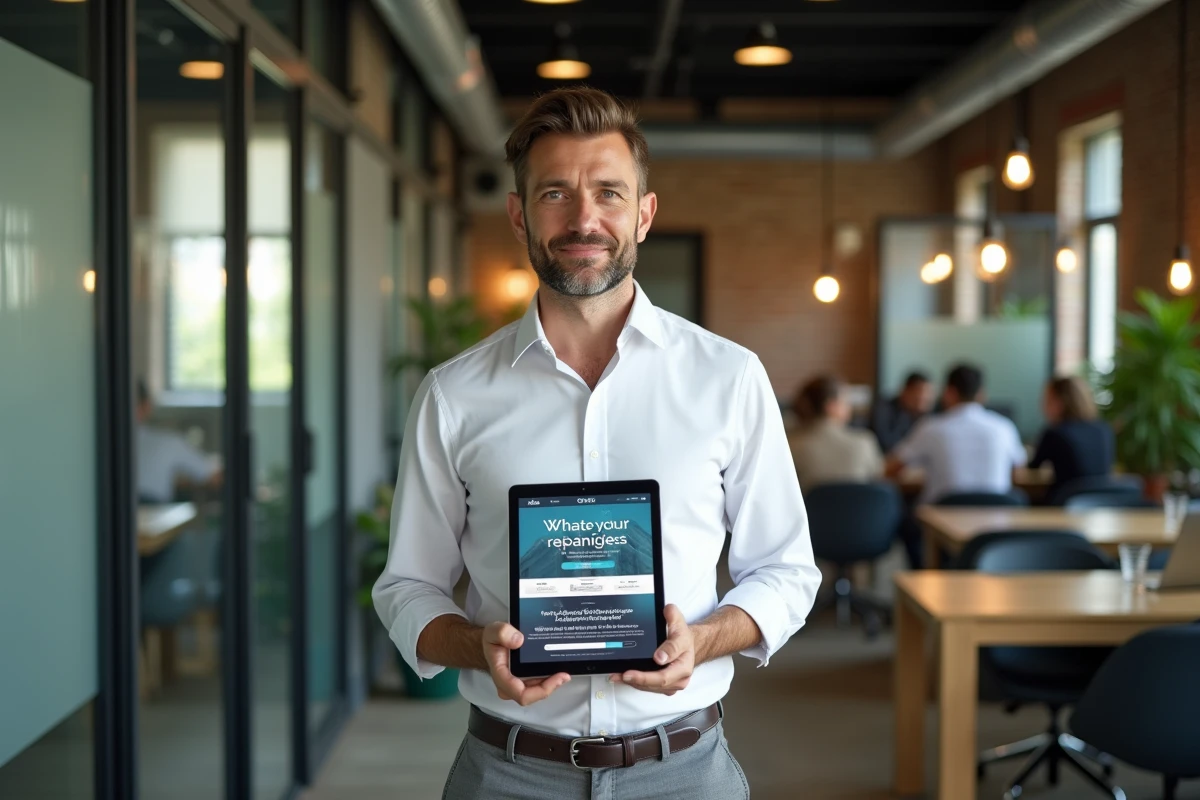
Tools, tips, and resources to successfully create your website today
Bringing your website project to fruition requires rigorous organization. Start by installing an SSL certificate: the famous “https” padlock immediately reassures visitors and favors SEO. Clearly display the legal notices, add the general terms of sale if you are selling products or services, and comply with GDPR regulations. This involves implementing:
- A clear consent form for data collection
- An accessible privacy policy
- A transparent cookie management
Maintenance should not be improvised: regularly update your CMS and modules to avoid security vulnerabilities. Monitor key performance metrics: traffic, bounce rate, user journey. These data (KPIs) allow you to adjust content, improve the browsing experience, and optimize the site’s position in search results.
Several initiatives are available to support each step. France Num offers digitization assistance for small businesses. Afnic provides an e-commerce pack to facilitate online presence, while Foliweb hosts free workshops and remote training. These resources allow you to train in all aspects: technical, regulatory, or marketing.
A professional website is no longer a luxury or a technical maze. It becomes the foundation of a sustainable activity, ready to welcome new ideas, open doors, and build lasting relationships. The next visit to your site could very well be the one that changes the trajectory of your project.