When booking a reception venue for a wedding, the first constraint is not the decor: it’s the noise. Even before comparing quotes or choosing a theme, the issue of noise pollution influences the end time of the evening, the type of music, and sometimes the number of guests.
Wedding venues in France are subject to rules that vary from one municipality to another, and the regional traditions that accompany the ceremony often depend on the chosen setting.
Noise Regulations and Choosing the Wedding Venue
It is often assumed that noise disturbances start at the same time everywhere. The legal distinction is between 10 PM and 7 AM for nighttime noise, but municipal decrees can impose additional constraints. A community hall in a residential area does not offer the same leeway as an isolated estate in the countryside.
This point also applies to municipal party halls, not just private venues. Neighbors of community halls regularly complain about disturbances related to weddings, which can lead the town hall to restrict hours or impose a maximum volume. Checking the written conditions of the venue and the municipal rules can prevent an unpleasant surprise on the big day.
For couples considering an outdoor ceremony under a tent, logistics become more complicated: the setup duration, the local urban planning regulations, and a potential location in a protected area can alter the formalities. The tradition of the jonchure on Instant Mariage serves as a reminder of these regional customs that also require a suitable setting.
French Regional Traditions Related to the Reception Venue
The reception venue is not just a backdrop. In several regions, it dictates the rituals that will punctuate the day. Three examples illustrate how closely tradition and space are linked.
The Jonchure in Northern France
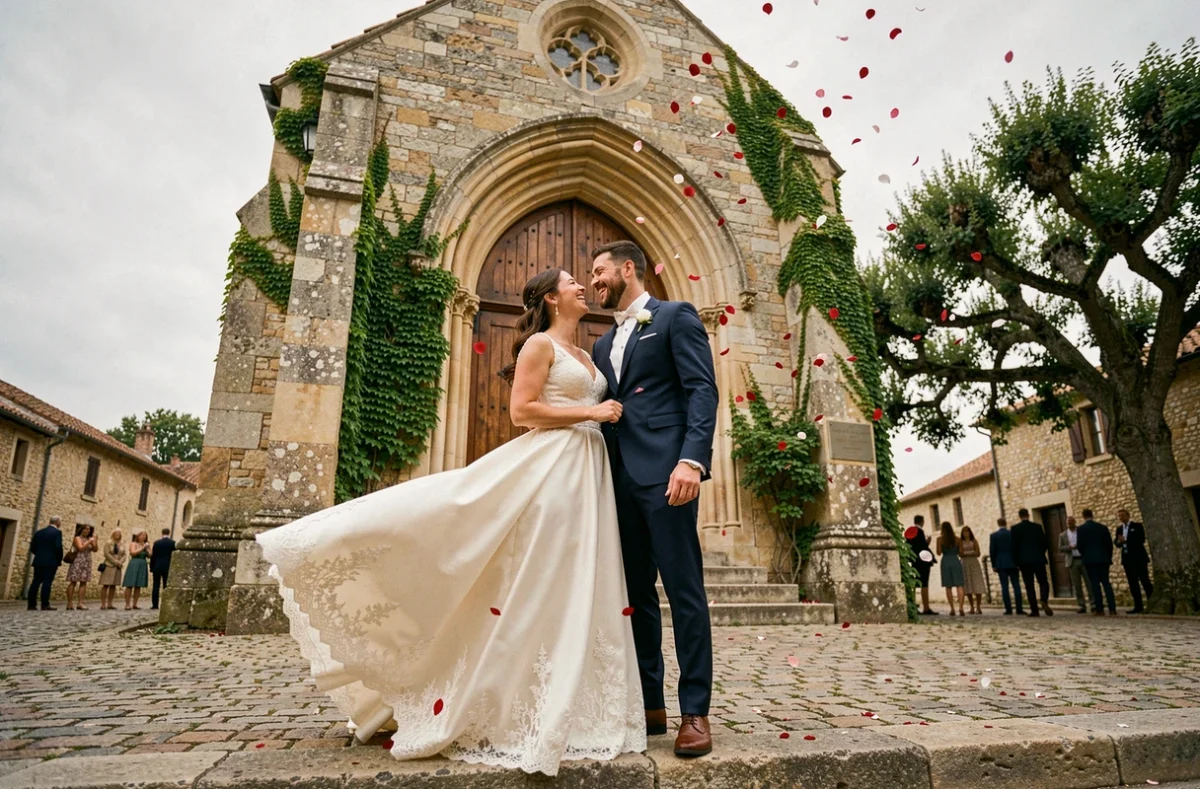
Pétals, foliage, or ribbons are strewn on the ground along the path taken by the newlyweds. This custom requires a defined route between two points (the church and the hall, or the ceremony site and the head table). Without a passable outdoor path, the jonchure loses its meaning. An estate with a clear pathway or a dirt road is more suitable than an urban restaurant.
The Umbrella Dance in Pas-de-Calais
The newlyweds dance under a white umbrella while guests throw streamers and ribbons. Each ribbon symbolizes a year of happiness. This ritual requires an open space, whether covered or not, but large enough for the couple to be visible to all.
The Brioche Dance in Vendée
A large brioche is carried in procession to the reception hall, then cut and shared. The tradition calls for a location with wide access, often a rural space or a farmyard. A narrow restaurant corridor is not suitable.
These three examples share a common point: tradition imposes spatial constraints on the wedding venue. A regional ritual is not chosen after signing the rental contract; it’s the other way around.
Outdoor Weddings: Steps Couples Often Forget
Setting up a tent or marquee on private land for a wedding is not just about driving in stakes. Depending on the setup duration and local regulations, a prior declaration may be necessary.
- Check with the town planning department to see if the land is in a protected area or subject to specific restrictions from the local urban planning plan.
- Ensure access for service providers (caterer, DJ, florist): a muddy dirt path after rain can block a refrigerated truck.
- Plan a weather backup with the tent rental company, specifying side closure and heating options if the reception takes place in autumn or early spring.
- Confirm the conditions for wastewater disposal and access to electricity, especially for agricultural land that is not connected.
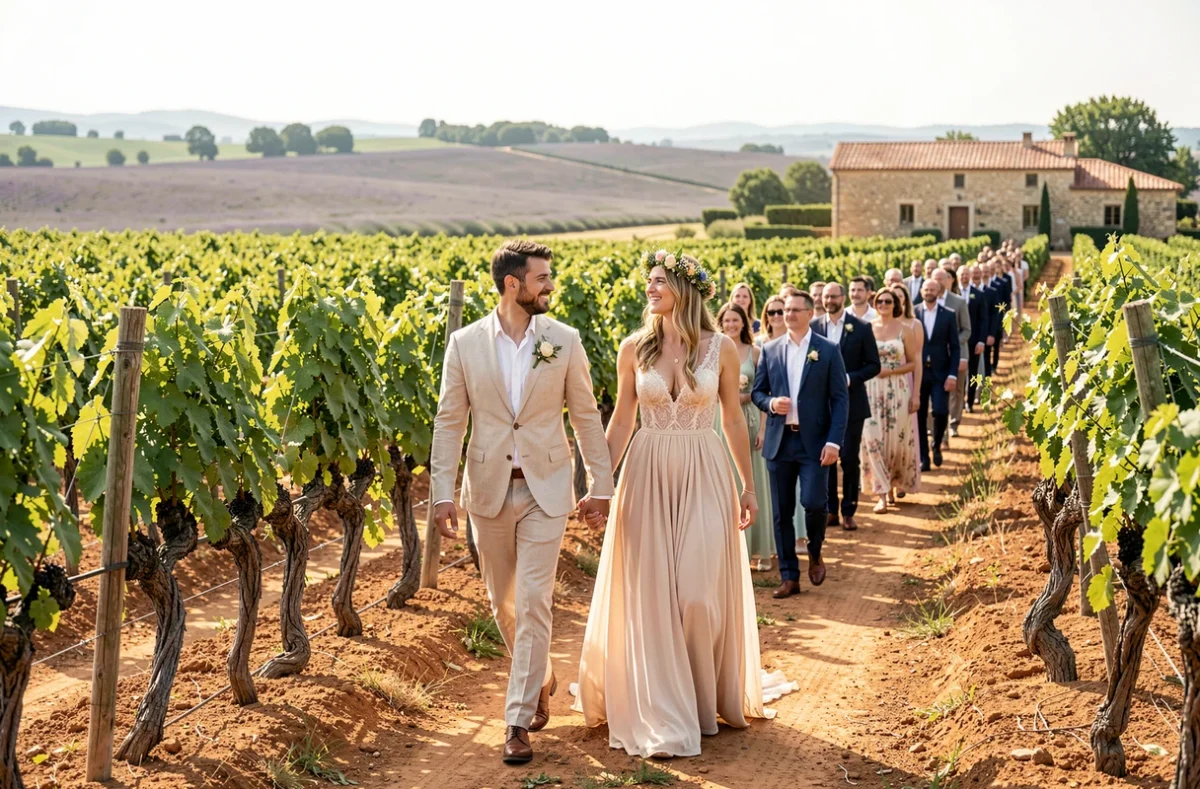
The accessibility of the venue deserves as much attention as its aesthetics. A photogenic lavender field can become a logistical nightmare if no vehicle can approach within several hundred meters.
Wedding Traditions and Iconic Venues Worldwide
Some wedding traditions around the world are inseparable from a type of venue. They cannot be transposed anywhere without losing their meaning.
In Greece, the couple passes under a cloth or a crown of flowers at the entrance of the Orthodox church. The porch of the religious building is an integral part of the ritual. In several Maghreb countries, the red carpet rolled out to the hall signifies the couple’s status and requires a straight path from the entrance of the venue.
In India and Central Asia, the bride sometimes arrives carried in a palanquin. This tradition requires a reception space large enough for the procession to maneuver. A venue with a wide forecourt or an inner courtyard meets this requirement.
In Sub-Saharan Africa, the procession dances to the reception hall. The distance between the ceremony site and the celebration venue is part of the celebration. Shortening this journey amounts to amputating the tradition.
What Really Influences the Choice of Ceremony Venue
Wedding venue catalogs often highlight photos and capacity. Three criteria that weigh just as heavily in the success of the day are often overlooked:
- The permitted hours for amplified music, which vary by municipality and type of venue (private, public, outdoor).
- The compatibility of the venue with the traditions the couple wishes to incorporate (outdoor space, pathway, porch, courtyard).
- The logistics of access for service providers and guests with reduced mobility, which are rarely mentioned in brochures.
A wedding venue that aligns with the couple’s traditions is worth more than a spectacular setting that is poorly dimensioned. The question to ask the venue owner is not “how many people can sit,” but “what are the time, spatial, and regulatory constraints we need to know before signing.”