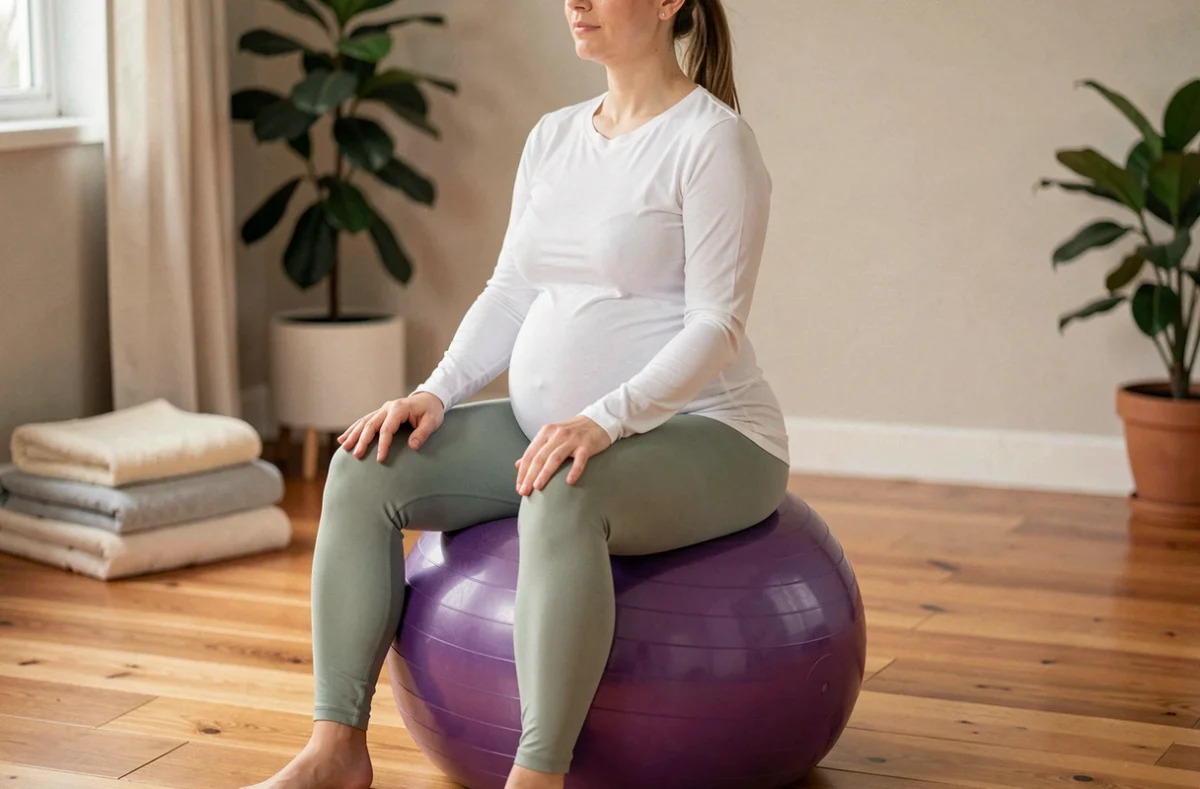
For a woman measuring 1m57, the choice of the diameter of a birthing ball is between two sizes: 55 cm and 65 cm. The size charts published by manufacturers do not all provide the same answer for this height, complicating the decision. This article compares the available recommendations, explains how to decide through a physical test, and details the often-overlooked parameters that influence actual comfort on the ball.
Ball 55 cm or 65 cm for 1m57: what the manufacturer charts say
Size grids vary from one brand to another. Some place the limit between 55 and 65 cm at 155 cm in height, while others set it at 163 cm. A woman of 1m57 thus finds herself sometimes in the 55 cm category and sometimes in the 65 cm category.
| Ball Diameter | Size Range (user) | Positioning of 1m57 |
|---|---|---|
| 55 cm | Less than 155 cm to 163 cm depending on the brands | Included in some grids |
| 65 cm | 155 cm to 175 cm depending on the brands | Included in most grids |
| 75 cm | Above 175 cm | Not applicable |
One manufacturer cited in the sources explicitly places individuals from 140 to 163 cm in the 55 cm category.
The key point to remember: to know which size of ball to use for childbirth, a chart alone is not sufficient when the height falls into an overlapping area. Checking on the inflated ball remains the only reliable method.
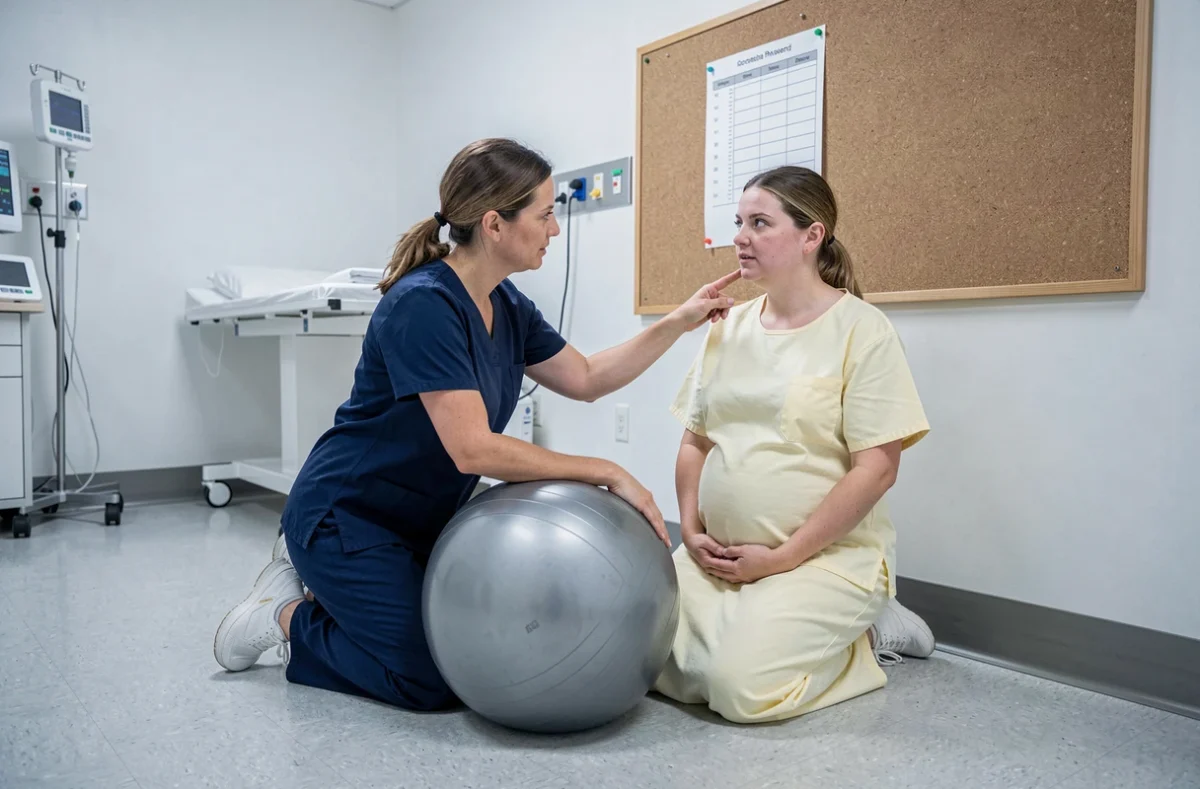
Sitting Position Test: the Check that Distinguishes the Two Sizes
The decisive criterion is not the diameter printed on the box, but the position of the knees in relation to the hips once seated. The knees should be slightly lower than the hips, with the feet flat on the ground.
How to Perform the Test on an Inflated Ball
- Sit in the center of the ball, barefoot or in flat shoes, with your feet apart at hip width.
- Check that your knees form an angle slightly greater than 90 degrees (thighs inclined downwards). If your knees rise to hip level or above, the ball is too low.
- Ensure that the soles of your feet are fully resting on the ground. If you find yourself on your toes, the ball is too high.
For a woman of 1m57, a fully inflated 65 cm ball may leave the feet partially suspended. A properly inflated 55 cm ball often provides better ground support at this height. The degree of inflation changes the situation: an under-inflated 65 cm can drop to a sitting height comparable to a well-inflated 55 cm.
Leg Length and Torso Height
Two women measuring 1m57 do not necessarily have the same proportions. A person with short legs and a long torso will need a lower ball more than someone with long legs. The positioning test captures this difference, where a chart based solely on total height cannot.
Inflation Level of the Pregnancy Ball: the Underestimated Parameter
The nominal diameter (55 cm, 65 cm) corresponds to the ball inflated to its maximum capacity. In practice, most balls are used slightly under-inflated, which reduces the sitting height by several centimeters.
A firm ball engages balance and pelvic floor muscles more. A softer ball offers a more stable seat, with a lower center of gravity. For labor in the delivery room, midwives often adjust the inflation according to the position adopted by the patient.
The inflation should be firm while yielding slightly under body pressure. A ball that is too soft loses its postural support function. A ball as hard as a marble prevents the tilting of the pelvis that aids mobility during labor.
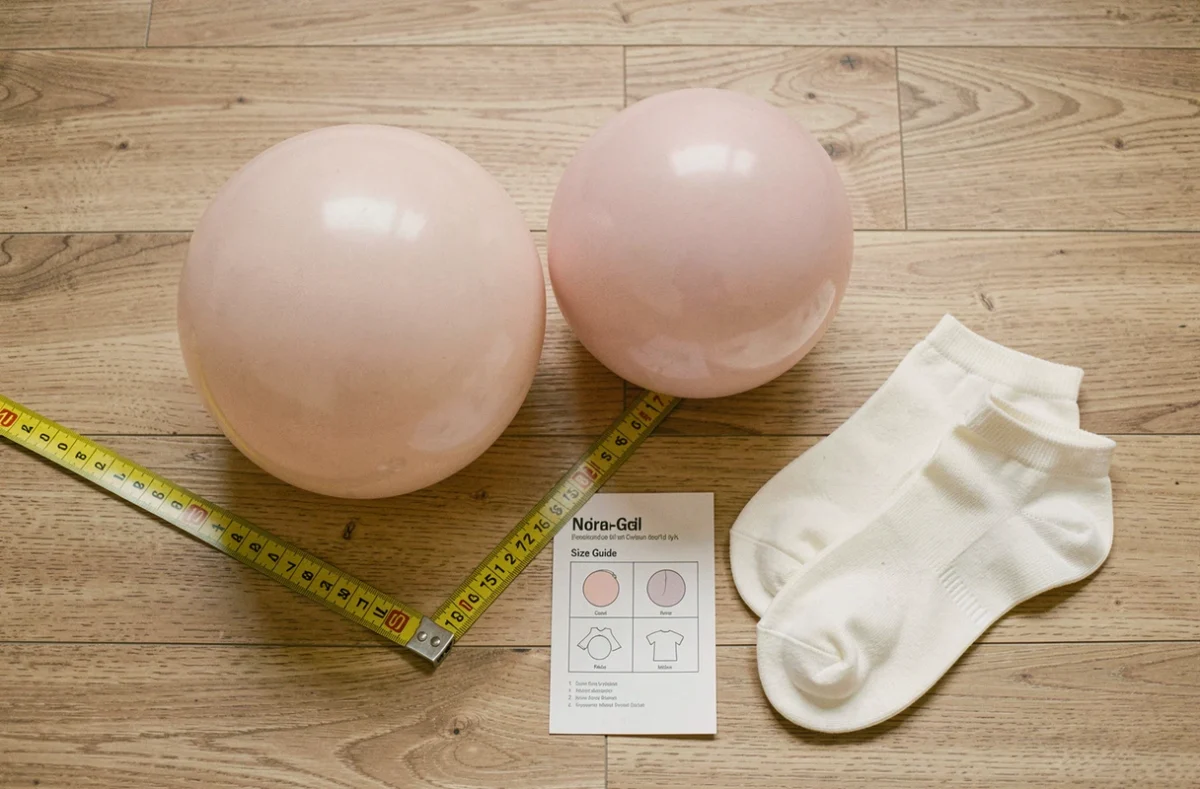
Round Ball or Peanut Ball in the Delivery Room: Two Distinct Uses
The classic round ball (swiss ball) is used seated, in a vertical position. It promotes pelvic rocking movements, rotations, and gentle bounces. The woman should be able to place her feet on the ground and maintain her balance independently.
The so-called “peanut” ball, shaped like a peanut, serves a different role. It is placed between the legs while lying on the side, including for women under epidural who cannot sit on a round ball. Hospital guides describe it as a complementary option, not a replacement.
The maternity where the delivery is planned may offer one or the other type of ball, or even both. It is useful to inquire in advance about the equipment available on-site, as not all rooms have 55 cm balls.
Safety and Anti-Burst Label for a Birthing Ball
A ball intended to support the weight of a moving pregnant woman must bear the “anti-burst” label. This label means that the ball deflates slowly in case of puncture, instead of bursting suddenly.
- Check the maximum load indicated by the manufacturer. It should comfortably cover the weight of the expectant mother at the end of pregnancy.
- The material is generally thick PVC. Avoid thin balls sold as toys or decorative accessories.
- A new ball may emit a plastic smell: airing it for a few hours before use limits this inconvenience.
The pregnancy ball is not a medical device. It does not induce labor and does not replace obstetric monitoring. Movements on the ball help with comfort and mobility, without guaranteeing an effect on the progression of labor.
For a woman of 1m57, the choice often comes down to a firmly inflated 55 cm ball. If the maternity only provides 65 cm balls, adjusting the inflation downwards allows for a compatible sitting height. The feet-on-the-ground test, knees under the hips, remains the only reliable judge, regardless of the diameter indicated on the packaging.