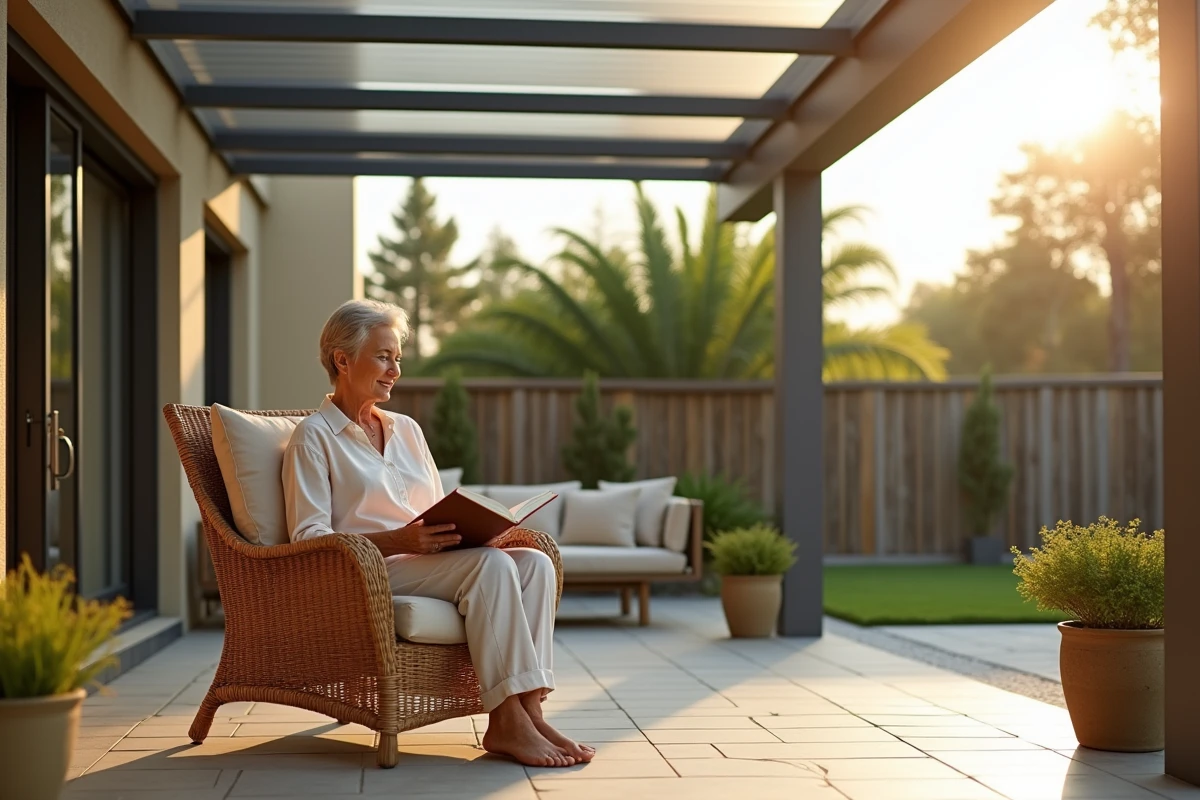
Polycarbonate transmits light, resists impacts, and is cheaper than tempered glass. These advantages explain its presence in a large portion of pergolas sold in France. The downside is measured on the thermometer: under a polycarbonate roof facing south, the temperature quickly rises beyond the comfort threshold, even with UV treatment.
Understanding where this thermal gap comes from and what levers reduce it allows for maintaining a usable outdoor space even in the height of summer.
Thermal transmission according to the type of pergola roof
The choice of roofing material determines the amount of solar energy that passes through the roof and transforms into heat under the structure. Comparing the major types of roofing helps to position polycarbonate on the thermal comfort scale.
| Type of roofing | Light transmission | Heat accumulation | Natural ventilation |
|---|---|---|---|
| Transparent cellular polycarbonate | High | Strong | None (closed surface) |
| Opal cellular polycarbonate | Medium | Moderate to strong | None |
| Adjustable bioclimatic slats (aluminum) | Adjustable | Low to moderate | Excellent (slats open) |
| Insulated sandwich panels | None | Low | None (requires openings) |
| Retractable fabric | Variable depending on the fabric | Moderate | Medium (side air passage) |
Transparent polycarbonate concentrates the two aggravating factors: high light transmission and lack of air circulation. The opal version reduces glare, but radiant heat still passes through the panel.
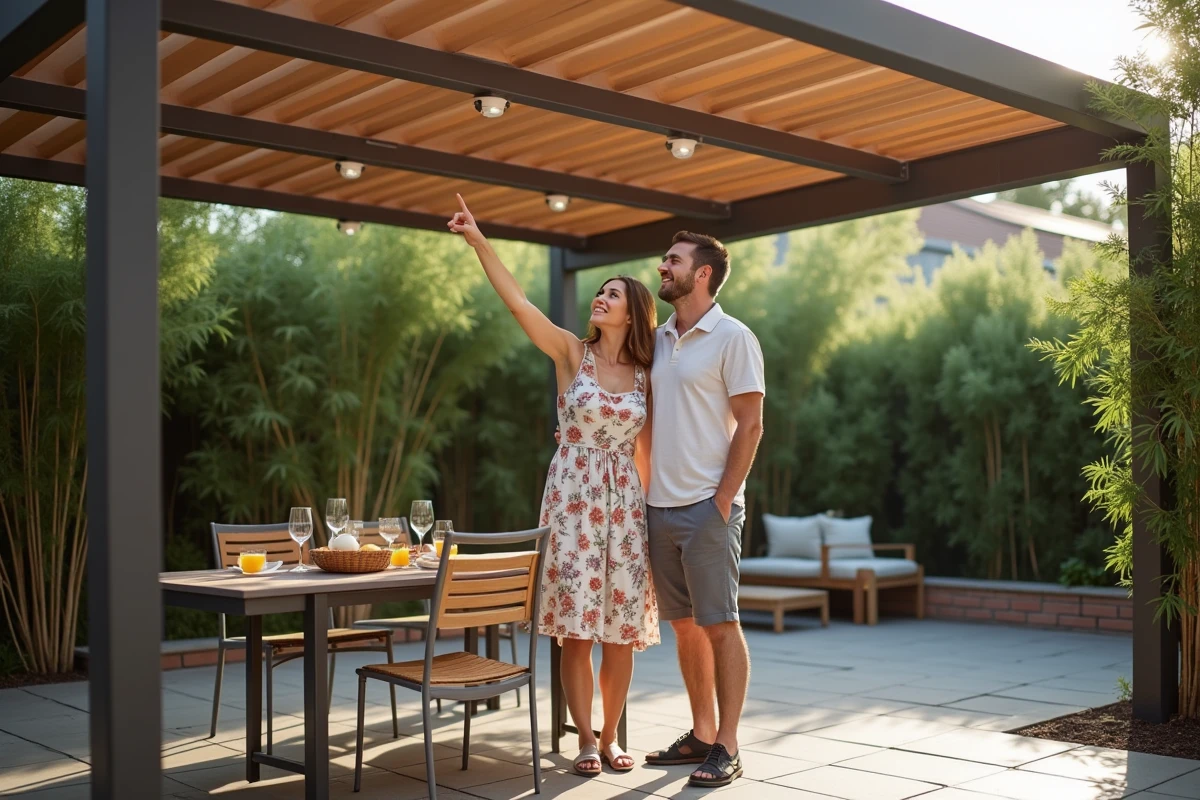
Bioclimatic slats, on the other hand, create a vertical airflow as soon as they are tilted. It is this active ventilation capability that explains the comfort gap between the two systems, much more than the nature of the material itself. To delve deeper into methods of heat protection under this type of roofing, several complementary techniques are detailed on the page dedicated to the anti-heat polycarbonate pergola with Ambiance et Déco.
Ventilation under polycarbonate roofing: the most underestimated factor
Filtering rays (sheet tint, reflective films, shades) reduces direct solar gain, but does not address the main cause of discomfort: warm air stagnates under a sealed surface.
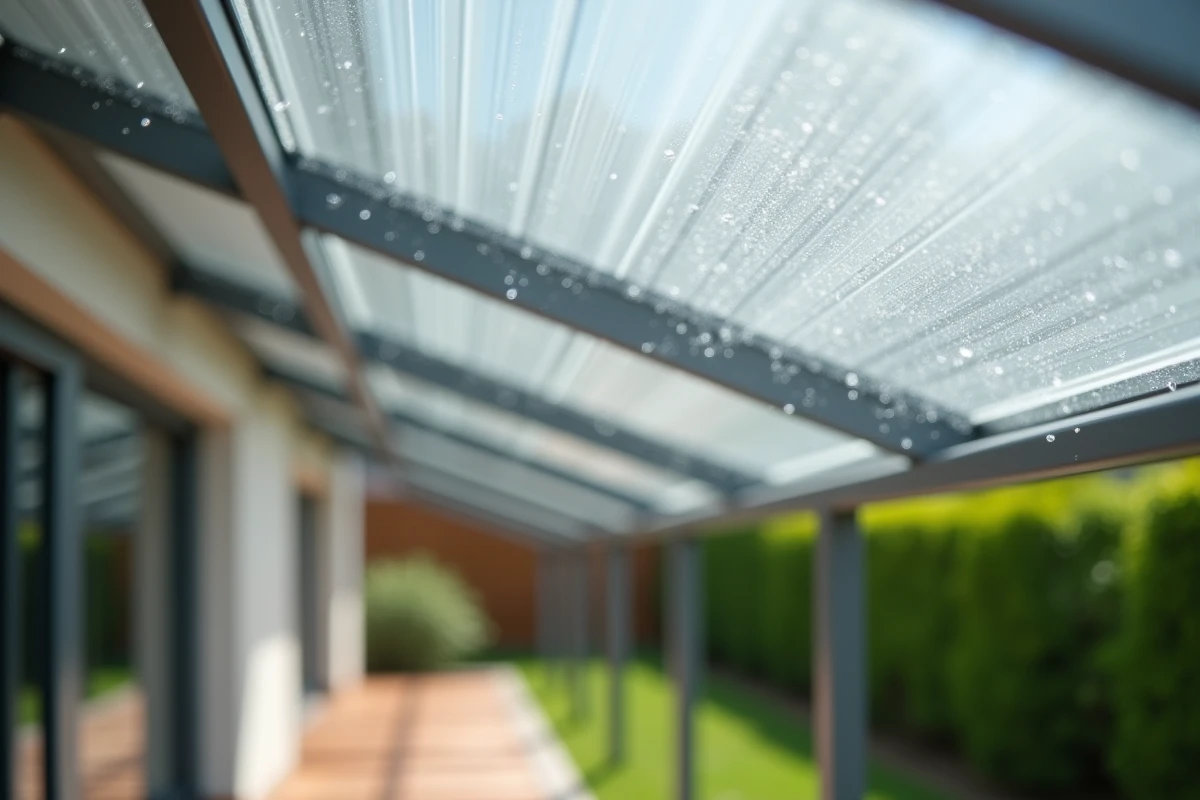
A polycarbonate roof closed on all four sides behaves like a greenhouse. The energy that enters only exits through slow conduction through the panel, or through lateral openings if they exist. Without air renewal, the temperature under the roof far exceeds that of the outside ambient air.
Create thermal draft without changing the roofing
Two simple interventions improve the situation on an existing pergola:
- Create a high opening (ventilated ridge, space between the panel and the backing wall) to allow warm air to escape through natural convection.
- Clear the lower sides of the structure to allow fresh air to enter. Any solid side panel or opaque privacy screen blocks this flow and worsens the greenhouse effect.
- Install one or two air circulators under the roof, powered by low voltage, to force circulation when the wind is absent.
The principle remains the same as for an agricultural greenhouse: without high evacuation and low entry, no solar filter is sufficient. Recent bioclimatic pergolas incorporate this mechanism from the design stage through adjustable slats that allow calibrated air passage.
Choosing polycarbonate panels: thickness, tint, and cellular structure
Not all panels are equal when it comes to heat. Three parameters play a direct role in thermal comfort.
Cellular structure and thickness
A triple-wall panel (three layers separated by cells) offers better thermal insulation than a simple double wall. The air trapped between the layers slows down heat transfer. The thicker the cellular structure, the greater the thermal resistance.
Moving from a thin panel to a thicker model significantly reduces heat transmission, at the cost of a loss of transparency and a moderate increase in price.
Tint and surface treatment
Opal or tinted panels (bronze, smoked gray) decrease light transmission and thus direct heat gain. An opal panel lets through significantly less light than a transparent panel, which limits the temperature rise.
An anti-IR (infrared) treatment applied at the factory blocks part of the thermal radiation without significantly reducing clarity. This treatment is less common than simple anti-UV, but several manufacturers offer it in their high-performance ranges.
Complementary protections: shades, vegetation, and maintenance
When ventilation and panel choice are not enough, external equipment takes over.
External shades and awnings
An awning placed above the panel is more effective than one placed below. The reason lies in physics: solar radiation is intercepted before reaching the polycarbonate, preventing the panel itself from heating and radiating inward. An interior shade only blocks visible light, not the radiant effect of the hot panel.
Climbing vegetation and mixed pergola
Allowing a deciduous climbing plant (vine, wisteria) to grow on part of the structure provides natural shading in summer and lets light through in winter. This principle of a mixed pergola, combining polycarbonate and vegetation, reduces the surface exposed to direct sunlight without eliminating protection against rain.
Maintenance and soiling
Dirty panels (moss, dust, leaves) disrupt water drainage and block any ventilation openings. Regular cleaning of the rails, seals, and surface of the panels maintains the thermal performance of the roofing and prolongs the lifespan of the polycarbonate.
On a polycarbonate pergola, the priority is to ensure that warm air has an exit at the top of the roof. A thick, tinted panel improves comfort, but without air evacuation, heat continues to accumulate under the cover.