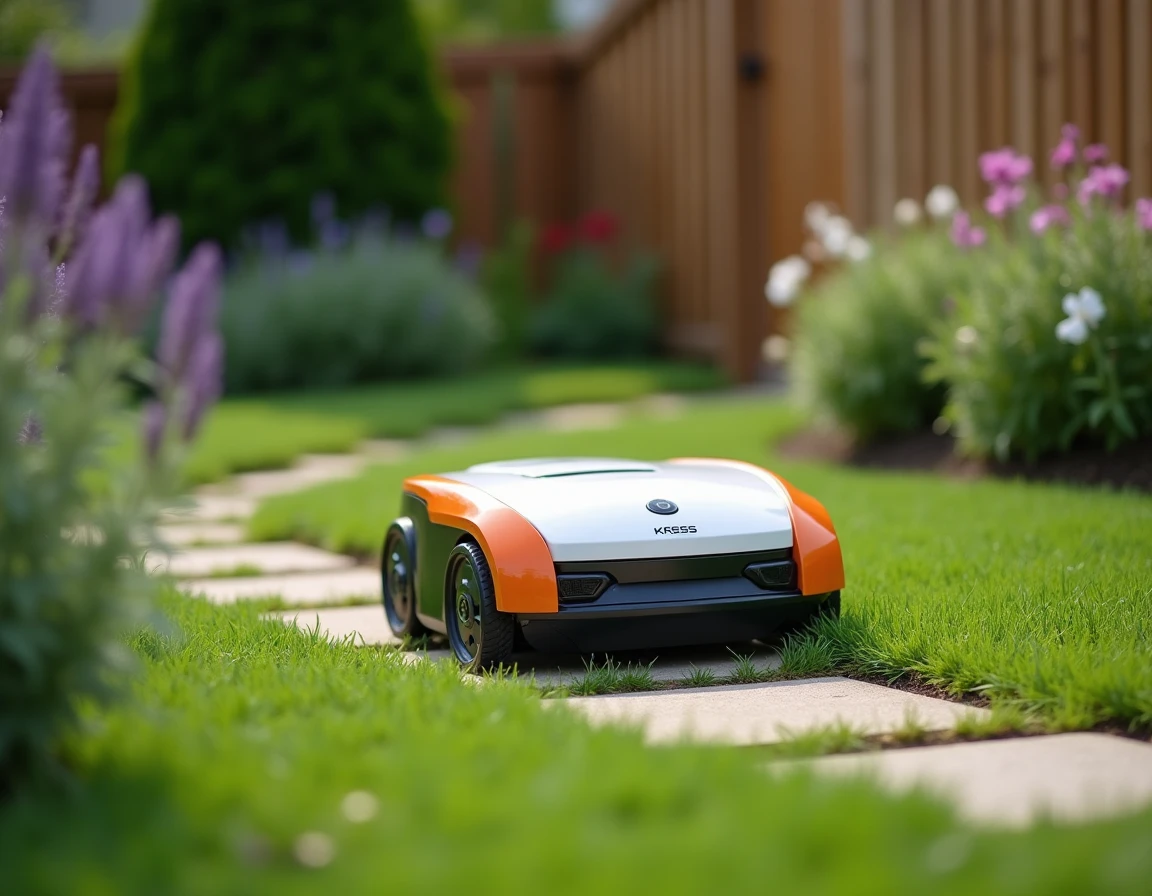
Kress robotic lawn mowers have gained visibility in recent years, supported by a range that covers both small gardens and areas exceeding one thousand square meters. Before finalizing a purchase, it is essential to understand what sets this brand apart from its direct competitors and, most importantly, what issues may arise once the robot is in service on your lawn.
Kress RTKn Navigation: What Technology Changes on the Ground
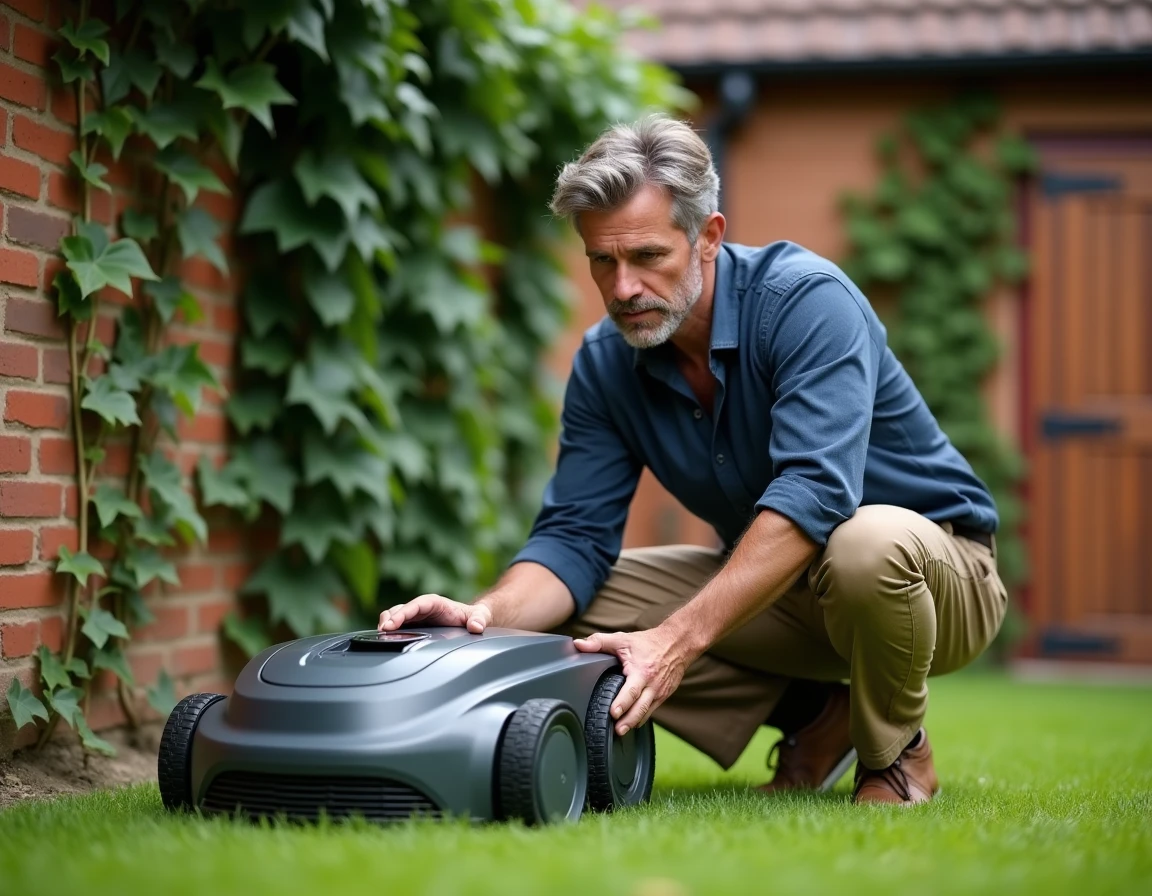
Kress offers a RTKn signal navigation system on its high-end models. Specifically, an antenna installed in the garden communicates with the robot to provide it with a precise real-time position, without buried peripheral wire.
On paper, this represents a significant time-saving during installation. In practice, the reliability of the RTKn heavily depends on the environment. A garden surrounded by tall trees, high walls, or metal structures can disrupt the signal. Since 2024, Kress dealer networks recommend prior ground surveying by an installer before any commissioning, specifically to avoid dead zones.
Before ordering, gather reviews on Kress robotic lawn mowers that mention the type of garden tested, as positive feedback in an open area does not necessarily reflect performance in a compartmentalized garden.
For plots with narrow passages, island beds, or steep slopes, the robot may experience multiple blockages or leave uncut strips along the edges. The RTKn performs better on open and clear terrain, which clearly influences the choice based on the configuration of your outdoor space.
Kress Software Updates: A Robot That Evolves After Purchase
Have you ever purchased an electronic device that improved its performance after an update? This is exactly what happens with recent Kress robots, particularly the Mission and RTKn ranges.
Since 2023, Kress has been rolling out regular updates via its mobile app. These patches address navigation, edge management, and cloud connection stability. Cleaner trajectories and fewer blockages after updates are among the feedback reported by installers in 2024.
However, there is a downside. Some deployments have introduced temporary bugs, requiring the dealer to intervene for reinstallation or recalibration. This aspect directly impacts your experience: a robot purchased and installed in spring may operate differently a few weeks later, either better or, occasionally, worse.
What This Means for the Buyer
The state of the firmware at the time of installation significantly influences initial reviews. A disappointed user in 2022 does not describe the same product as an owner whose robot has received three major patches since then. Keep this in mind when reading online feedback, and check with the dealer that the delivered robot has the latest software version.
Kress Pricing Positioning: Not Always the Budget Alternative
Kress has long been perceived as a more affordable option compared to Husqvarna. This is no longer systematically the case. The brand now structures its offering around professional support, with installation and configuration by an authorized dealer.
This shift towards a more structured service changes the decision-making process before purchase. The total cost includes not only the robot and its station but also the installation service, ground surveying (for the RTKn), and potentially software maintenance interventions. The overall budget approaches that of a high-end Husqvarna or Mammotion.
Comparing only the catalog price of the robot overlooks half of the equation. Always request a quote that includes installation and any follow-up fees for the first season.
Kress Mission KR121E: A Mid-Range Model to Know
The Mission KR121E remains one of the most referenced models at Kress. It operates with a boundary wire, which makes it similar to traditional robots. Here are its main features:
- Brushless motor, 20 V battery, and autonomy of about 50 minutes per cycle, with a charging time of about two hours
- Cutting width of 20 cm and adjustable height between 30 and 60 mm, suitable for ornamental grass
- Maximum incline of 35%, covering most gardens with moderate slopes
- Noise level of 61 dB, quiet enough to operate during the day without disturbing the neighbors
This model is suitable for recommended areas around 1000 m². Its boundary wire makes installation more predictable than the RTKn, but requires initial installation work.
Kress vs. Husqvarna: Concrete Selection Criteria
Why hesitate between these two brands? Husqvarna offers longer operating cycles, which reduces the number of returns to the charging base and puts less strain on the battery over time. If battery longevity is a concern for you, this is a tangible argument in favor of Husqvarna.
Kress stands out with its mapping tool. From the app, you can modify mowing zones without physical intervention on the ground. For a garden whose layout evolves (new beds, temporary play area), remote mapping offers a flexibility that Husqvarna does not provide in the same way.
- Husqvarna: longer autonomy per cycle, very extensive after-sales service network, generally higher price
- Kress: remotely modifiable mapping, frequent software updates, variable pricing depending on the model and included service
- Mammotion: an alternative to consider for complex terrains with vision-based navigation, but a less structured dealer ecosystem in France
The choice depends as much on the garden configuration as on the expected level of service. A simple and open terrain highlights the strengths of Kress. A large, tree-filled garden with many obstacles favors a robot whose navigation has proven effective in this type of plot, regardless of the manufacturer.
Before signing, have the ground surveyed by the dealer. This is the only way to know if the targeted model will function correctly at your location, and it is a step that online feedback cannot replace.